
Chantli means home in Nahuatl; that safe space cared for by the Chaneques. This is the story of love and reciprocal care that brought this bonsai here.
A Chaneque was walking through the forest when she found a seed unlike all the others. She didn't recognize it, but she was curious. What would come out of it? She took it with her and planted it next to the ahuehuetes, on the edge of the lake.
She waited for it to germinate.
Weeks passed. Nothing.
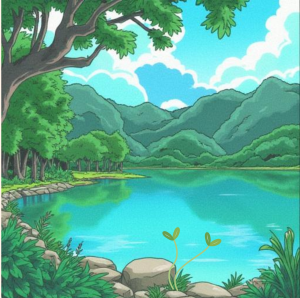
She thought that perhaps it had never been a seed, but a small round rock. She stopped paying attention to it and continued caring for the lake and the trees she already knew.
Months passed.
One day, a small seedling emerged. It was different from all the flora in the forest. The Chaneque felt pleased. Now she visited more often to watch it grow, full of questions: what would its flowers be like? What color? Would it bear fruit?
But the plant grew very little. Its leaves were thicker than normal and it didn't seem to like so much water. Its fragile branches broke when ducks, turtles, or frogs entered or left the lake. The Chaneque decided to remove it from the shore. Perhaps it needed less water and more sun.
She took it to her home, inside the forest, and experimented: different sun exposures, different watering methods, different nutrition, different ventilation. Finally, the plant began to grow. It expanded. It became leafy.

The other forest creatures also noticed it. With affection and curiosity, they approached to touch it as they touched the rest of the trees. But this little plant lost leaves when touched. It lost a branch when a squirrel jumped from a pine and fell on it.
Soon the word spread: that plant is very delicate. You shouldn't touch it. Don't even get close.
The Chaneque noticed something was happening. The forest creatures looked at the tree askance and murmured. She approached to ask.
—It's that strange tree you have —they said—. You can't touch it because it breaks. You can't lean on it because it breaks. What is it doing in the forest? What is its purpose if it hasn't even bloomed?
The Chaneque replied:
—It's a very different tree, it's true. I also had many doubts. It took me a long time to learn how to care for it so it would grow. But that time made me notice things that aren't in other trees: it stores a lot of water and loves the sun. I carefully touch its trunk every morning and say good morning to it. It's planted in direct sun because it likes that. I've grown fond of it and I don't have all the answers about its function in the forest. But one thing is clear to me: nature brought this seed here for a reason. I want to take care of it. I invite you to come by in the mornings to greet it, touching its trunk. It's always cool. Its leaves are very soft, you just have to touch them carefully. Look…
The forest beings approached carefully. Some touched it. Others were still skeptical. But they understood that the Chaneque was right: Mother Nature is wise, and we all have a space in her that sustains and cares for us.
Years passed. The tree grew at its own pace. Sometimes it lost branches or leaves when someone jumped on it because they forgot it wasn't a Montezuma cypress or a pine.
One year a great drought arrived. The lake level dropped significantly. The Montezuma cypresses were dry. The forest animals were worried: without flowers, the bees wouldn't be able to pollinate, and the life of the forest was in danger.
The Chaneque took a trip to meet other chaneques, from other climates, and discuss how to care for nature in such situations. She was returning home after weeks of absence when she saw all the forest beings gathered outside her house. She quickened her pace.
When she reached the entrance, she saw everyone passing one by one to touch the tree's trunk and thank it.
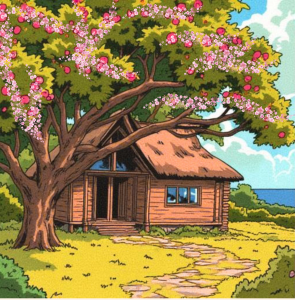
—While you were away —explained a rabbit—, the different tree bloomed for the first time.
The heat and extreme drought had made it bloom with all its might. What had never bloomed before… were many pink flowers, so small, so full of pollen, that all the bees in the forest came to seek it out.
The Chaneque, moved, approached the tree and said to it:
—Hello, Chantli. I'm back. Thank you for being the safe space for the entire forest in the midst of this crisis. Now I understand that you didn't bloom because the conditions weren't optimal for you. Now I understand that you stored water to bloom in drought. Caring for you required different strategies because you were made for different conditions. And now we can see it.
She turned towards the others.
—On my trip, I was in the desert, the jungle, and the savanna. Each space has distinct flora and fauna. The diversity is enormous. We all have a place where the conditions are optimal for us. Now I understand that Chantli's seed comes from the desert. This is not the climate that favors it. By caring for it, we adapted the conditions so it could live… but these changes also provided the conditions for it to bloom.
The forest animals listened for hours to everything the Chaneque told them about other climates, climate change, and what humans were doing in the world.
When the rains returned and the lake level went back to normal, the forest animals gathered to take Chantli out of the ground. They put it in a pot. This way they could create the hot and dry conditions that Chantli needed to thrive.
Chantli bloomed every year and gave many seeds. Thus, more trees of abundance were born in that forest.
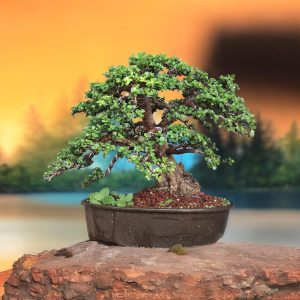
Cuando las condiciones del mundo se volvieron más adversas, los seres del bosque le pidieron a la Chaneque que llevara a Chantli donde los humanos, para que les recordara que el cuidado y el amor crean los espacios seguros para que cada quien pueda florecer.
Si estás leyendo esto desde el código que acompaña a Chantli, puedes hacer un gesto de cariño como tocar suavemente su tronco o decirle ‘gracias por ser hogar’. Todo acto de amor hace eco en el universo.
Do you want a bonsai with history inspiring your space?
CContact: taran@taranbonsai.com