
 Doing this process of observing with the senses works in a conversation with Neurotypicals because stimuli have an average parameter among them and these are experiences they can relate to.
When we are talking about a neurodivergent experience, the senses can perceive differently. A Neurodivergent person may have much more sensitivity or much less in their senses, making the experience more difficult to share. I have recently seen sensitization exercises where people are given headphones and the sound of fireworks is played in the way dogs hear them so they can relate to the horror it is for more sensitive ears, and that's exactly what happens to me in places with many sounds at once; it generates overstimulation for me, but I see other people acting as if they weren't noticing it, and indeed, they don't notice it because their neural connections are different from mine; I am more sensitive to sounds. Trying to make a clear observation would look something like this: “I hear, even with the window closed, the noise of cars passing in the street, that of children playing in the park on the corner, the birds arriving at the trees in the park, also here, in our offices on the other side of the door I can hear colleagues in the kitchen heating food in the microwave, and here inside the meeting room I can hear the chair creaking with the colleague who is moving their leg, the sound of the projector fan, and the coffee maker gurgling with boiling coffee,” and only when I name them and they pay attention to each of the stimuli does their brain recognize them as something existing but not relevant enough to prevent them from paying attention to the task they are focused on.
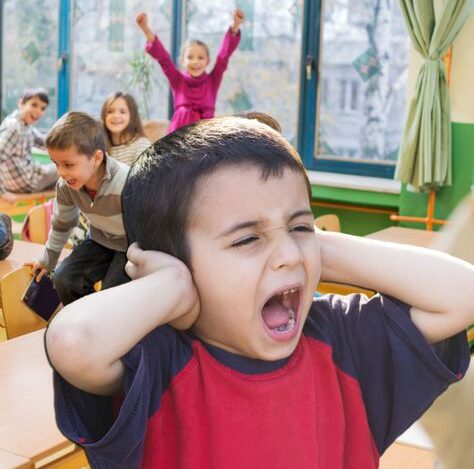 Furthermore, in the paragraph above I am only writing about auditory stimuli; if I were to go through the other senses, it would be something like this:
“Added to the auditory is the smell of coffee and the perfume each of you is wearing, the smell of the whiteboard markers we are writing with, and the smell of the synthetic carpet they just installed. I also notice the glare from the reflection of the white building coming through the window and the white lights of this office, and all of this is making it difficult for me to pay attention to what you are asking me…”
Being able to name a single situation in a world experience where the senses are so receptive is a challenge that NTs do not face.
I grew up in an environment where I was taught to mask, that my needs and my perspective were not relevant and I had to suppress myself to belong/survive; my nervous system was active every time I was in contact with other people, and my space for relaxation and release was to manage to get to the end of the day, lie down, and throw myself into the space between the bed and the wall to get some deep pressure because my world wasn't interested in knowing what was happening to me; only what improved my efficiency or my results to be a better daughter or a better student was important, and that remained until my adulthood where I had to be the best employee.
If these experiences are added where one learns to mask and where naming a situation will not make this experience shared, the first step of NVC becomes a great challenge, if taken literally. That's why I returned to the initial objective of why to make an observation instead of expressing judgments. What is sought with this methodology is to deactivate the amygdala and activate the prefrontal cortex of the brain, that is, we seek to deactivate the part that reacts automatically as a survival reflex and connect the part of the brain that allows us a shared experience.
What other strategies can we find to have a shared objective experience?